Founding CTO Marketplaces, payments & platform modernisation
Reinaldo Gunawan
I built Kick Avenue’s original platform and lead its engineering function, combining architecture, team leadership and hands-on backend development.
401Unauthorized
monthly active users at Kick Avenue · available on request
401Unauthorized
registered accounts · available on request
50+
people hired (across all roles)
401Unauthorized
Kick Avenue valuation · available on request
Career at a glance
From graduate analyst to CTO
Kick Avenue is one continuous role, founding CTO from 2017 to now, full-time from 2022. The other roles ran alongside it.
Kick Avenue
Founding CTO · 2017 – present
Built the marketplace from zero. Full-time from 2022. Lumen 5.5 → Laravel 12.
2014 – 2019
Australian Taxation Office
IT Graduate Program · Test & Systems Analyst
Digitised paper forms; entered via the competitive graduate intake.
Boxaladin
CTO · 2017 – 2018
2019 – 2022
Soyaka AI
VP of Engineering
C# + Lumen backend with async microservices, a Postgres social feed and AI services; team of 7.
Blocksphere
Senior Software Architect
Migrated MongoDB → GunDB; solo-built a Rust (Substrate) hotel-booking and NFT system; led 8 engineers.
2022 – 2024
Starcade
CTO
Shifted from a high-burn Australian crypto agency to a core local team (0 to 10). Cut contractor spend 60% after the CEO postponed crypto features indefinitely.
MyConnect.ai
Lead Backend Engineer
Go microservices, later moved to AWS Amplify.
LoudNClear.ai
Backend Engineer
Go bulk-data integrations (Mixpanel, HubSpot, Twitter v2).
2022 – now
UK Car Glass
Backend Engineer · 2024 – 2025
Serverless Rust backend from scratch.
Bespoke Labs
AI Engineer · 2026
Wrote coding challenges for training AI models.
Kick Avenue Founding CTO since 2017 · full-time from 2022
Indonesia's sneaker & streetwear marketplace
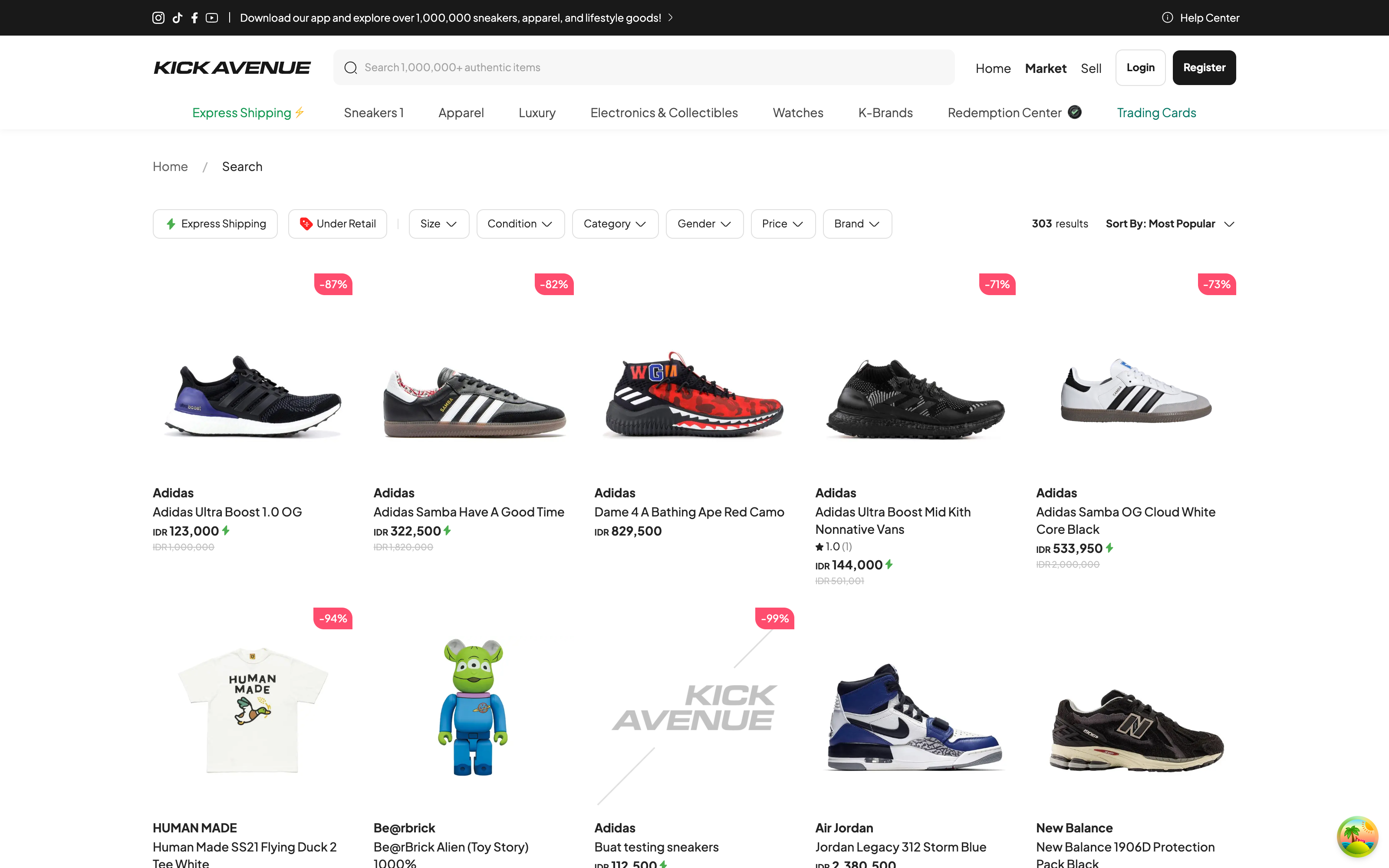
An authenticated resale marketplace with bids, offers, consignment and warehouse verification. I architected and led the entire technology stack, from the first commit to today's platform.
Live in Production
- Kard Avenue launched in April 2026 on Kick Avenue’s backend, 3 months after the instruction to build.
Problem
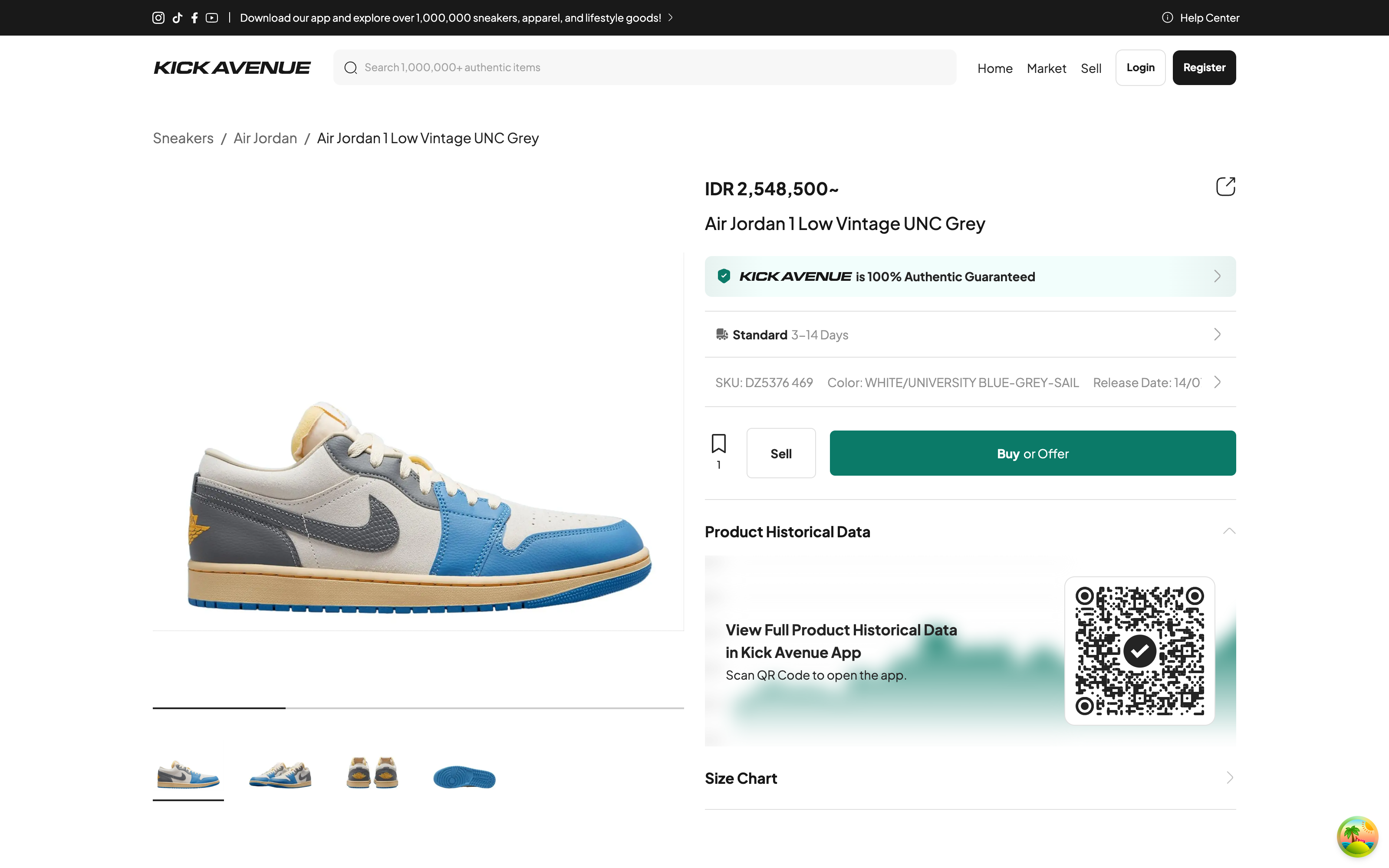
Buyers needed to trust that every pair is authentic, and sellers needed one place to list, price, ship and get paid, across the web app, the mobile app, and marketplaces like Shopee and TikTok Shop.
My role
CTO and hands-on architect. I designed the system. Across my leadership roles I have hired over 50 people (across all roles) in engineering, QA, product and design. Kick Avenue’s current team is 4 engineers, 1 product, 1 QA and 1 designer. We use AI-assisted development and review. I still ship backend code every week (1,292 commits to the API monolith since Oct 2025).
Impact
401Unauthorized
monthly active users · available on request
401Unauthorized
registered accounts · available on request
401Unauthorized
GMV and orders / month · available on request
~60%
server cost cut, from $16k/month in 2025
Kick Avenue web · search
Product page
Kick Avenue Architecture & team
One platform, many channels
WebNext.js 16
Mobile appFlutter
Admin CMSReact
ShopeeOpen Platform
TikTok ShopPartner API
↓
Laravel 12 API monolithPHP 8.4 · Octane / FrankenPHP · listings, bids, offers, sales, consignment, returns, disbursements, CMS, marketplace sync
Go checkout serviceGin · offers, payments, webhooks
↓
MariaDBprimary store
Rediscache & locks
RabbitMQqueues + retry / dead-letter
OpenSearchsearch, circuit-broken
↓
PaymentsMidtrans · Xendit · BI-SNAP e-wallets
LogisticsBiteship · ID Express · SPX · J&T
KubernetesKustomize · health probes · alerts
Leadership
- 7 people now ship what 12 did, with output and quality held by AI-assisted review and automated tests
- Prioritised the work that moved the business: in-house Shopee and TikTok instead of middleware, and checkout as its own service
- Set the review culture: an AI-assisted PR review workflow (Claude Code & Codex) shared across repos
- Run incident response: postmortems that end in codified probes and edge alerts
Engineering bar
- ~1,700 PHPUnit test files in the monolith
- Feature work ships with tests and a written runbook
- Moving hot paths out of the monolith, starting with checkout
401Unauthorized
listed units · available on request
Kick Avenue Backend modernisation
Lumen 5.5 → Laravel 12, then a returns engine on top
Live in Production
Problem
A 2017-era Lumen 5.5 monolith ran every money flow. It was hard to test and hard to scale, and it lacked a safe workflow for returns, refunds and relisting.
What I did
- Upgraded Lumen 5.5 → Laravel 12 / PHP 8.4 behind a test harness I built first
- Moved to Octane on FrankenPHP; fixed long-running-worker memory leaks
- Wrapped OpenSearch in a circuit breaker with cached fallbacks
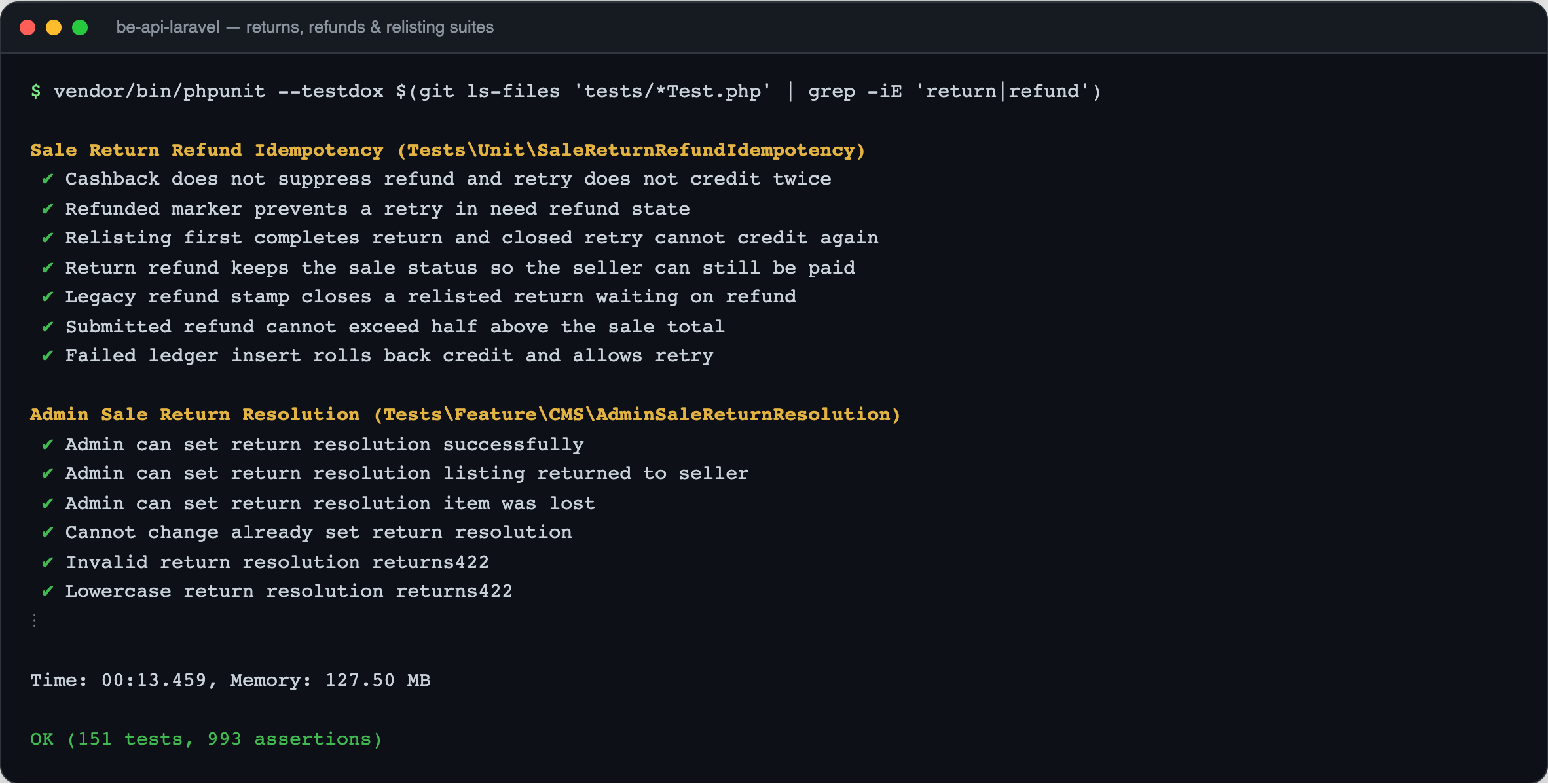
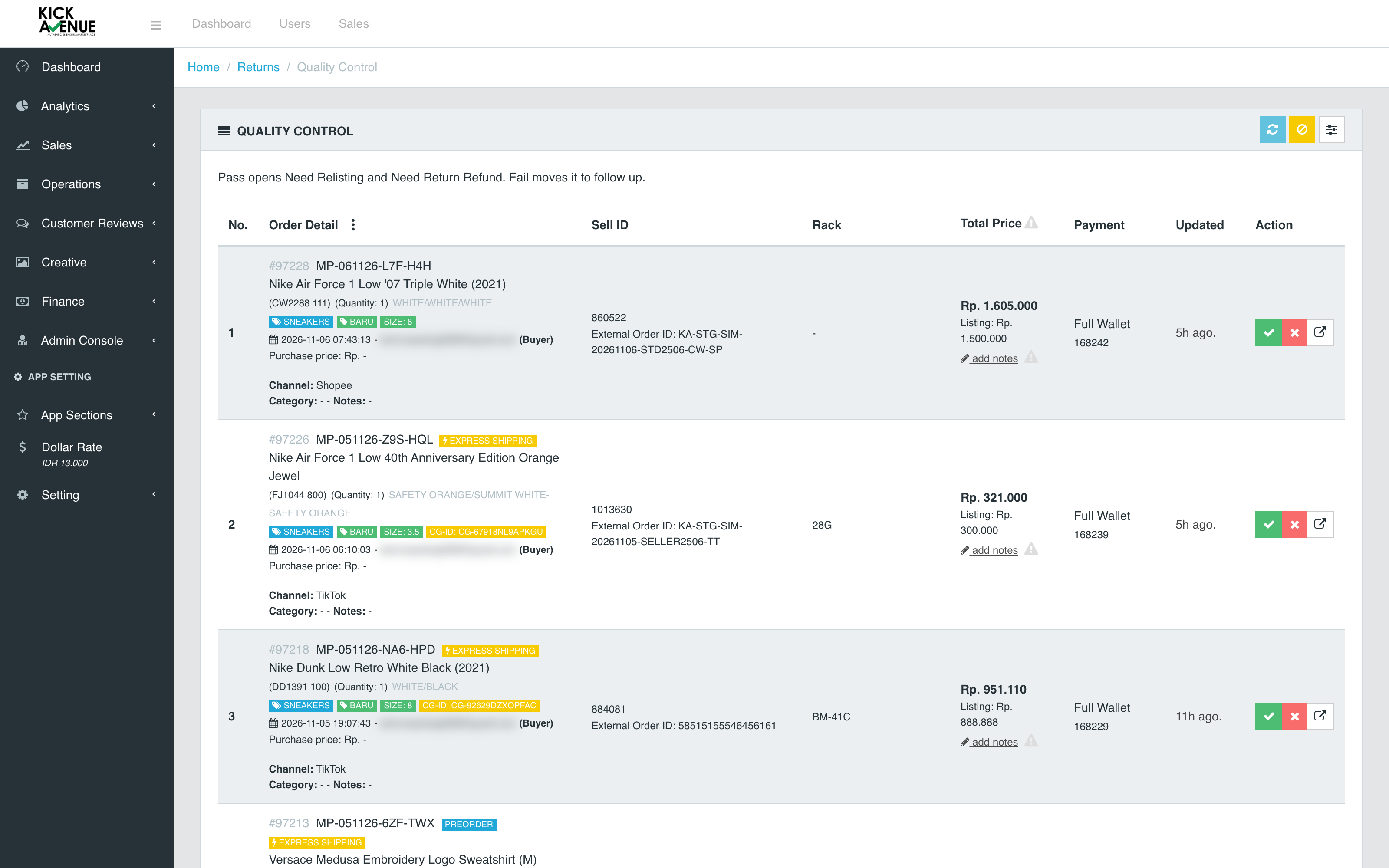
- Built the returns workflow: QC → relist or refund, idempotent credits, a 1.5× refund ceiling, and the CMS screens for it
What improved
- Search can fail without taking the API down: OpenSearch sits behind a circuit breaker and cached fallbacks
- Returns, refunds and relisting follow one workflow, and a refund cannot exceed 1.5× the order
Laravel 12PHP 8.4OctaneMariaDBRedisRabbitMQOpenSearchPHPUnit 11React CMS
Admin CMS · Returns › Quality Control (staging, customer data blurred)
Kick Avenue Marketplace integration · 1 / 2
Direct Shopee & TikTok Shop integration
Live in Production
Replacing Anchanto with in-house sync means one inventory sells on Shopee and TikTok. Order volume and the share of GMV are available on request.
Catalogue sync
Stock or price changesper size, ready-stock vs pre-order
→
Dirty queuechanged variants, batched
→
Create / adopt / updatenever duplicate listings
→
Shopee · TikTokrate-limit aware
Order pipeline
Signed webhookHMAC verified, stale rejected
→
Allocate inventorymatch SKU + mode
→
Auto ready-to-shippickup / drop-off resolved
→
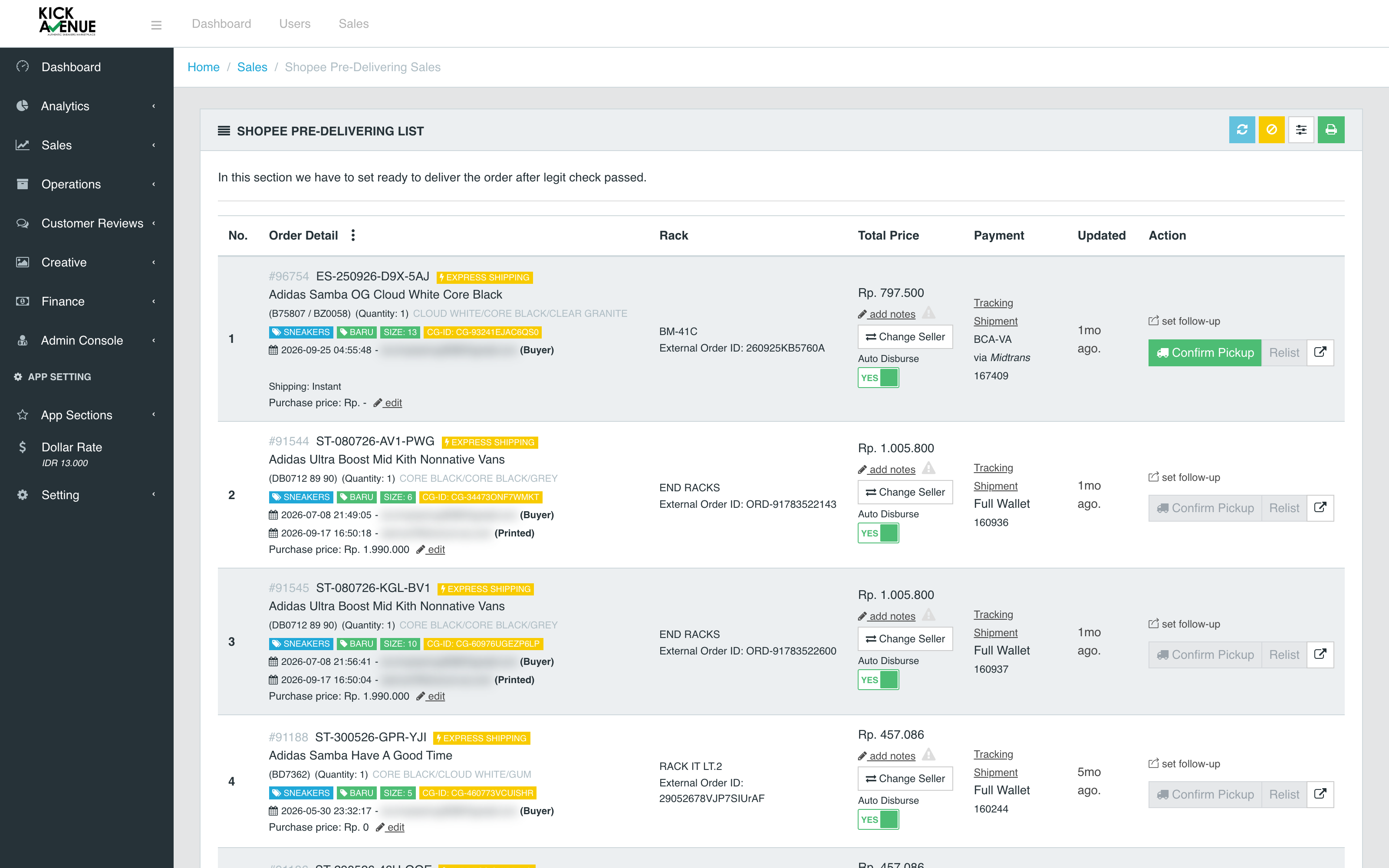
AWB + pickup PINto CMS Pre-Delivering
401Unauthorized
Shopee + TikTok orders / day · available on request
401Unauthorized
share of GMV from Shopee + TikTok · available on request
Admin CMS · Shopee Pre-Delivering (staging, customer data blurred)
Kick Avenue Marketplace integration · 2 / 2
Built to fail safely
My role
Designed and built both integrations end to end: API clients, signing, sync engine, order ingestion, CMS handover, and the technical reference the on-call team uses.
Design decisions
- Twin services, no shared state. Shopee item/model and TikTok product/SKU are mirrored but isolated, so one channel's outage never blocks the other
- Write guards and rate-limit backoff that honour Retry-After headers
- Adopt before create: existing remote listings (even Anchanto-era ones) are claimed, never duplicated
- Idempotent shipping: "already shipped" counts as success, so retries are safe
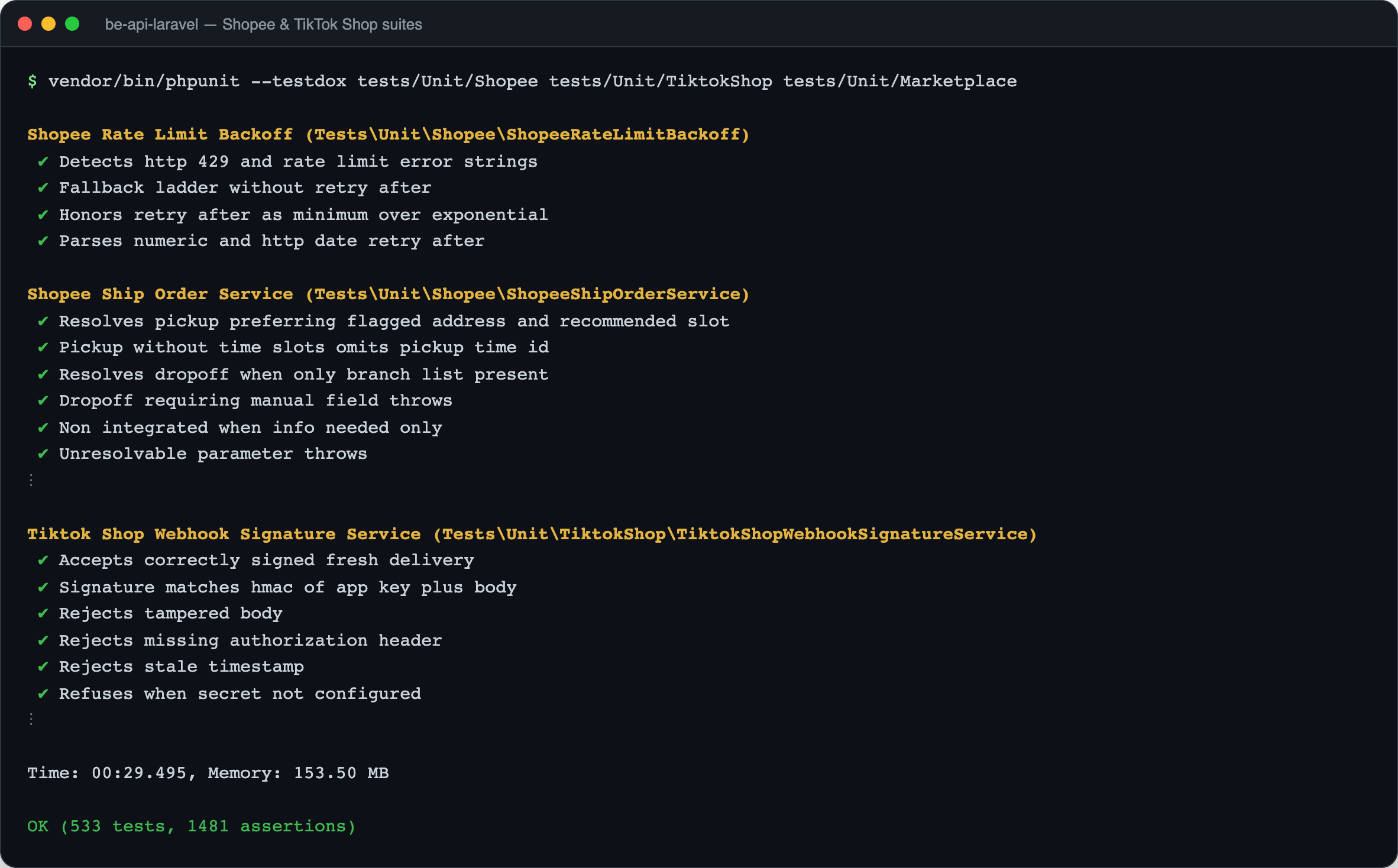
533
marketplace tests, all passing
Integration tests run locally against disposable MariaDB and Redis databases.
Kick Avenue Payments
Carving checkout out of the monolith in Go
Under Development
Checkout is where money moves and where bugs hurt most. I'm moving it into a small Go service with explicit offer states, so every payment outcome, late or out of order, lands in a defined state. Checkout is the first slice of a strangler-fig move: it leaves the monolith now, and the rest of the backend follows to Go one service at a time. We estimated at least a 30% infrastructure saving from lean services instead of scaling the PHP monolith’s nodes.
Next.js webbehind a flag, Laravel fallback
→
Go checkoutoffer → charge → settle / expire / refund
→
Midtrans · Xenditcard, VA, invoice · BI-SNAP e-wallets
Stockrestock on expiry / rollback
←
MariaDBshared with the monolith
←
Signed webhooksverified, foreign ones 404
What improved
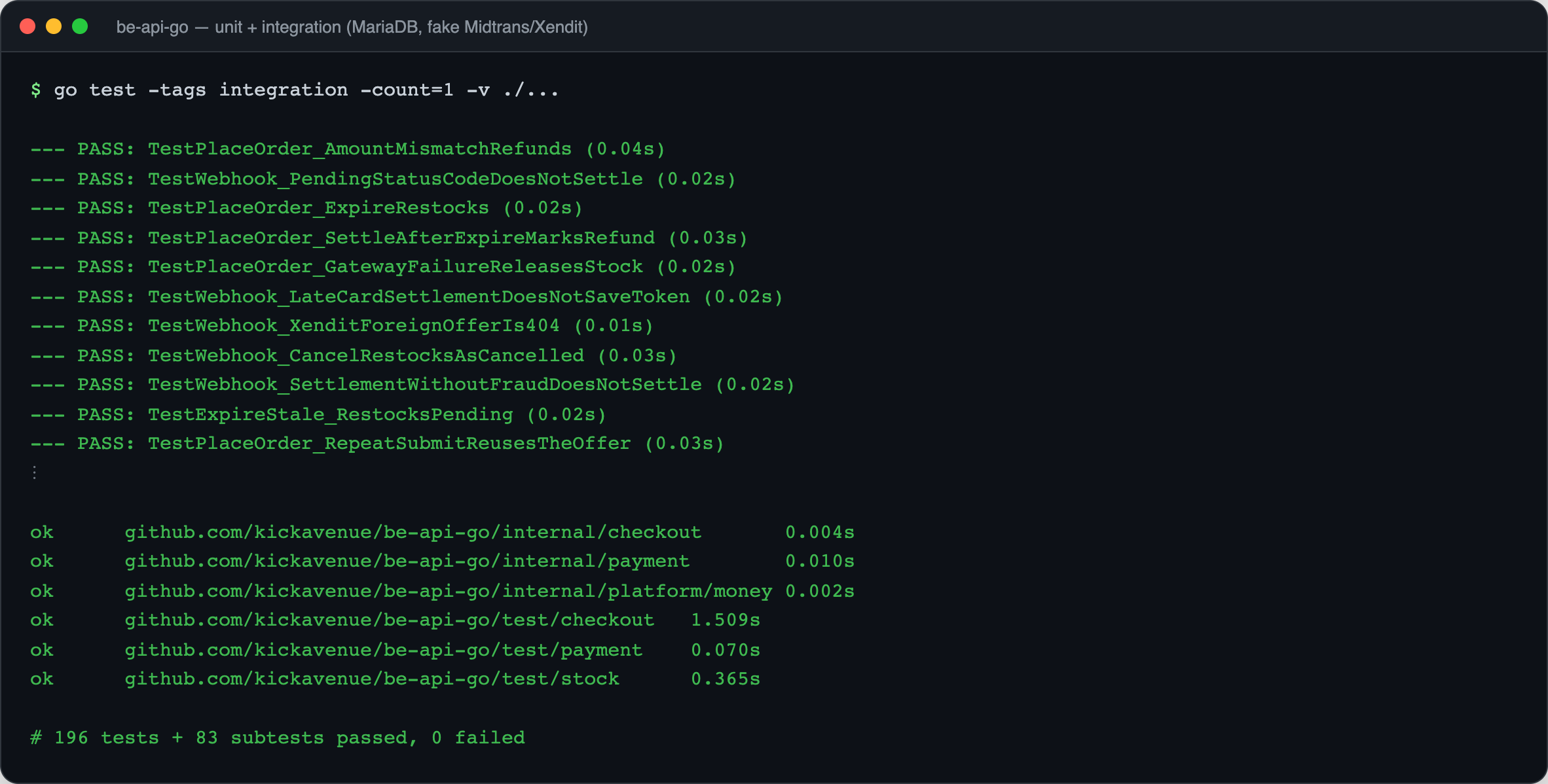
- Late or mismatched captures become a settlement or a refund, never a silent paid
- Stale offers expire and restock; a repeat submit reuses the open offer
- Kubernetes manifests checked with kubeconform in CI
GoGinMariaDBMidtransXenditBI-SNAPKubernetes
Integration tests run locally in a Go container, against a disposable MariaDB and fake payment servers.
UK Car Glass Backend Engineer · 2024 – 2025
A serverless Rust backend, from scratch
Cancelled
Problem
A windscreen-replacement business needed a fast, cheap-to-run catalogue and ordering API: windscreens searchable by make, model, year and position, priced by several merchants, plus a technician app. Branches had to run in the UK, Denmark, the USA and Indonesia from one place, so the data layer had to be global.
Web & technician appCognito auth
→
API GatewayHTTP API
→
Rust on LambdaAxum · same binary runs locally
DynamoDB global tablesUK · Denmark · USA · Indonesia · 4 tables · 13 GSIs
Stripepayments + webhooks
AWS CDKall infra as TypeScript
My role
Only backend engineer. I built the new stack and migrated it off a legacy Python backend, and used the work to train up on Rust: data model, API, bulk catalogue imports (NAGS and Mygrant CSV), group-by-year availability, cursor pagination, multi-merchant pricing.
RustAxumAWS LambdaDynamoDBCognitoStripeAWS CDK
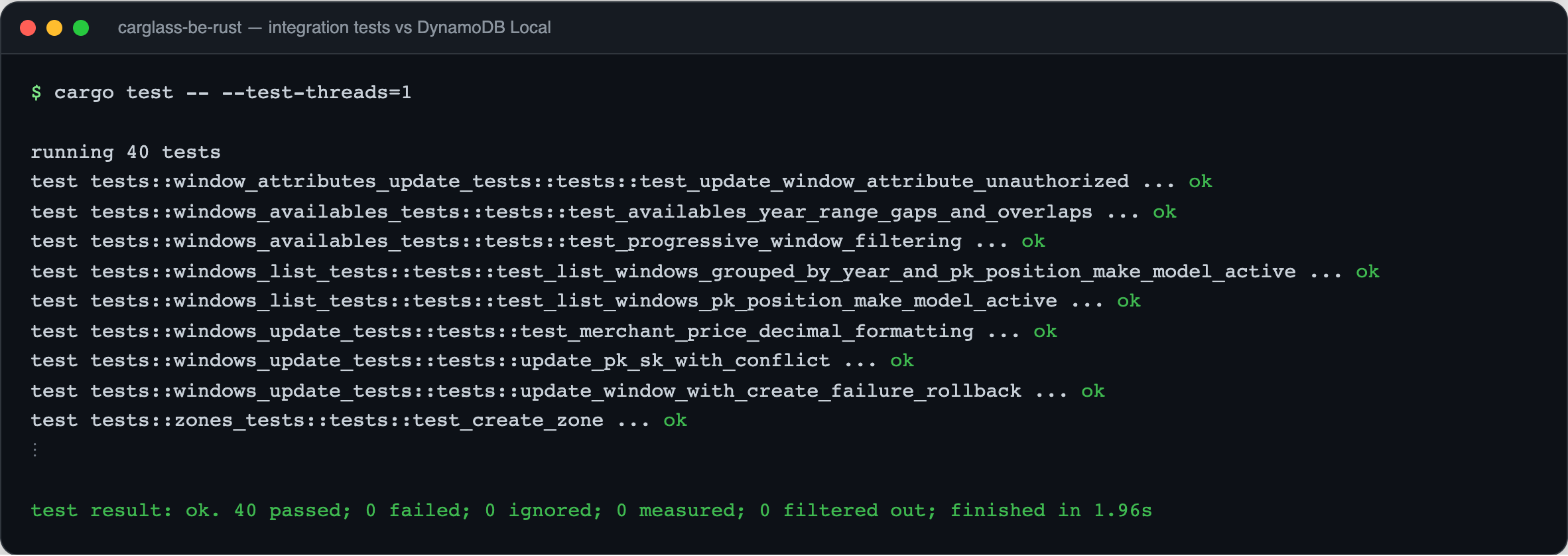
Integration tests run locally against disposable DynamoDB tables recreated from the CDK definitions. 40 tests, 1.96 s.
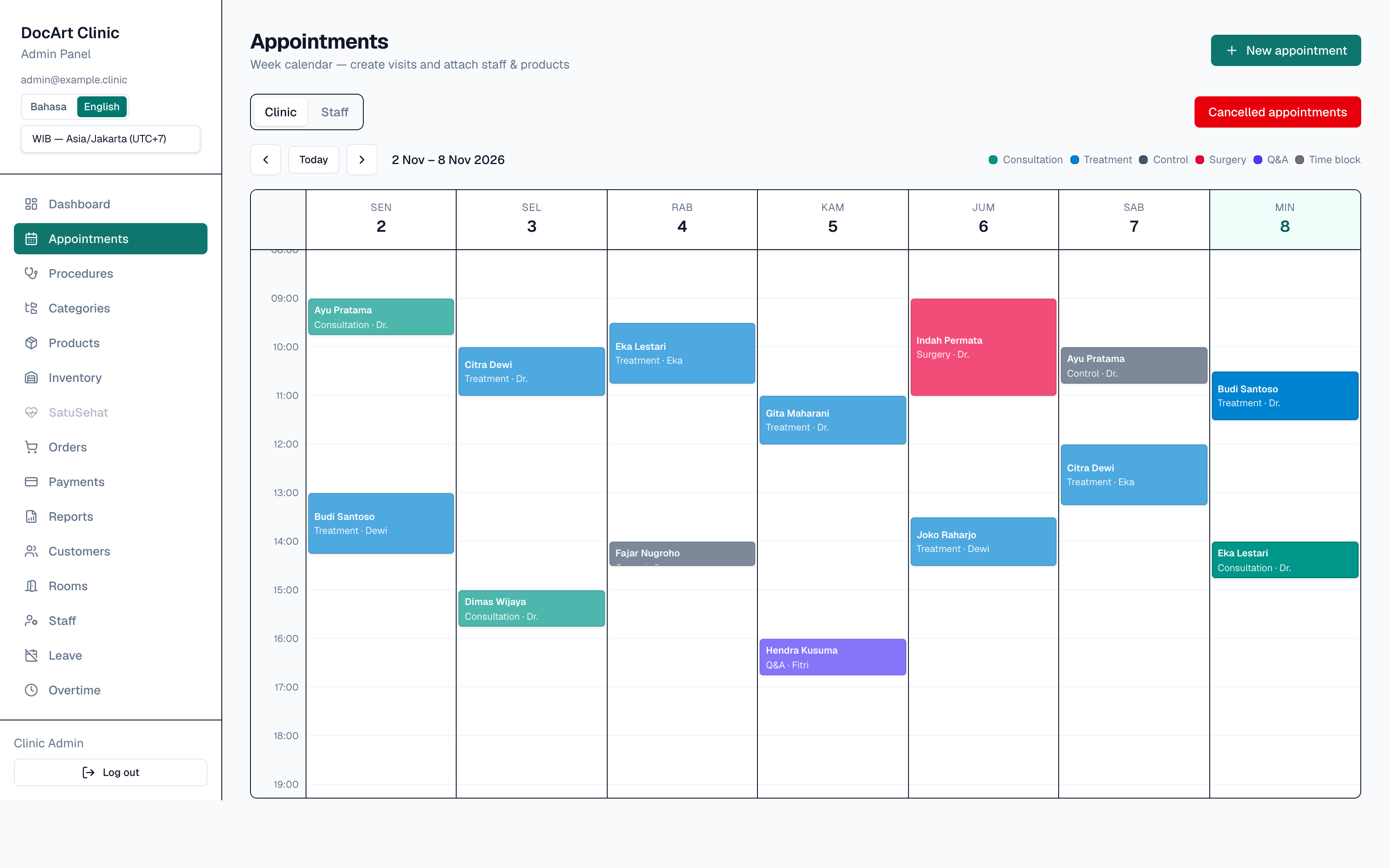
DocArt Clinic Client project · 2026
A clinic ERP and storefront, solo
Under Development
Problem
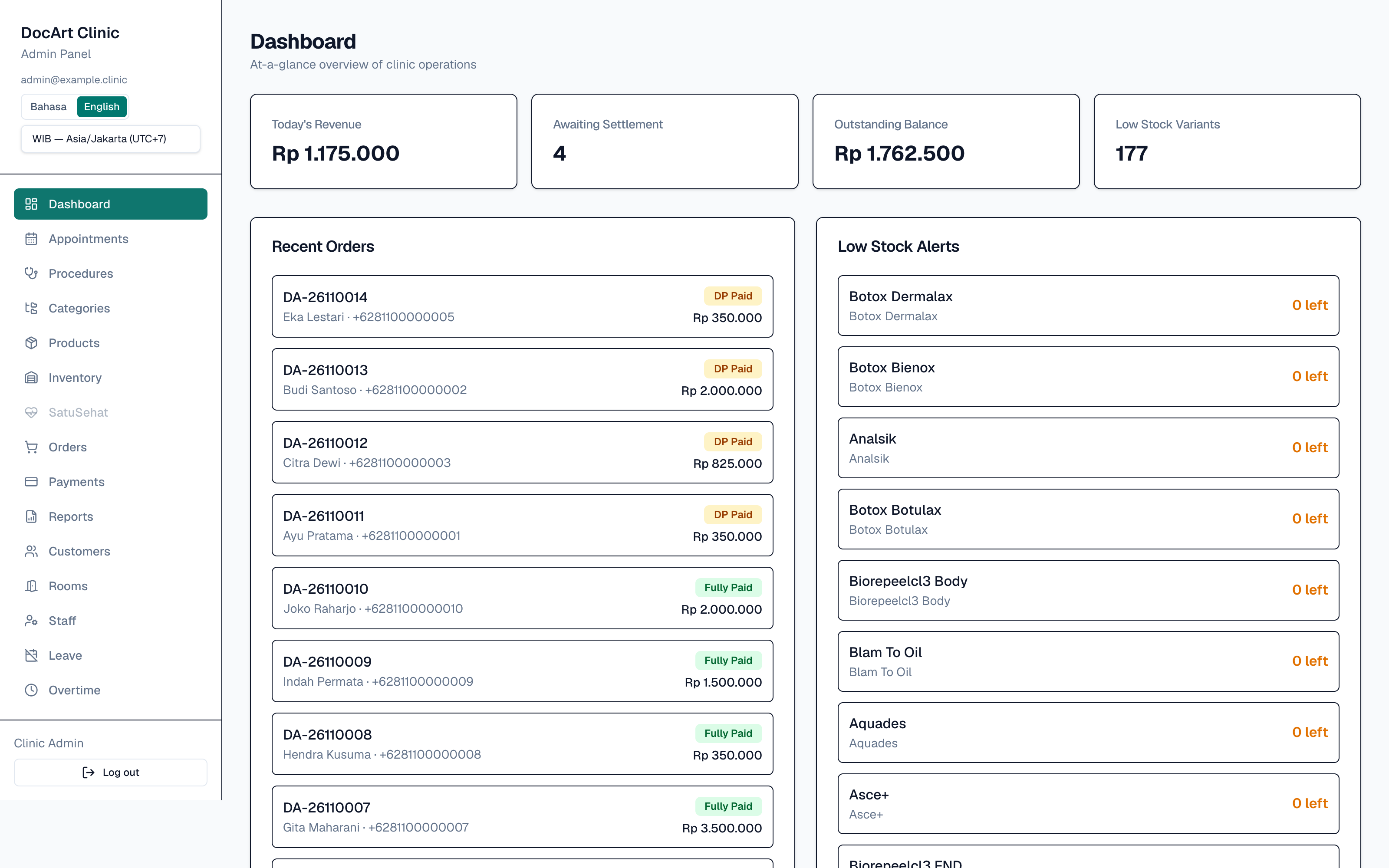
An aesthetic clinic needed one system for appointments, treatments, stock, staff leave, payments and patient records, connected to SatuSehat, Indonesia's national health-record platform.
What I built (sole engineer, 73 commits)
- Appointment calendar by clinic, staff and room, with commissions per assignee
- Orders with down payments via Midtrans, stock and low-stock alerts
- SatuSehat (FHIR) patient-record lookup; private S3 storage for medical photos
- HR: leave rules (cycles, caps, eligibility) and overtime; Indonesian/English UI
Next.js 16React 19Prisma 7PostgreSQLNextAuthECS FargateAurora ServerlessS3 · SES
Appointments · week view (seed data)
Dashboard
Bespoke Labs AI Engineer · 2026
Hard coding tasks for training AI models
I wrote long engineering tasks used to train and evaluate models. Each one was solvable, verifiable, and graded on behaviour rather than a single expected diff.
- Tasks came with a reference solution I wrote and checked, plus tests the model could not see
- Graders punished shortcuts: reading the hidden tests, or a fix that only worked on the small cases
- One example was a Kafka-compatible broker in Rust, built in five stages
Kafka to Rust, five stages
1 · Wire format
2 · Storage and network
3 · Topics and data
4 · Consumer groups
5 · Transactions, then a full broker
Side projects Applied AI
Small AI tools I built for real problems
Under Development
Company AI assistant · Kick Avenue
A chat that answers "how do we…?" from the team's own Jira, Confluence and Slack, with citations. Docs are chunked and embedded, retrieved with pgvector, and answered by a swappable LLM.
- Pluggable LLM layer: switch Gemini ↔ OpenAI by config, embeddings included
- Resumable Slack ingestion, so a large workspace syncs in safe increments
- Raw documents archived to object storage (Google Drive, Huawei OBS or local) for re-indexing
- Answers stream token by token and cite their sources
TypeScriptTurborepopgvectorGeminiRAG
Active
Ping-pong highlight clipper · personal
Turns a full table-tennis match video into ready-to-post highlight clips. A spoken "highlight" plus a clap marks the rally, and ffmpeg cuts it.
- Two signals, one cue: a spoken keyword and a clap within 2.5 s merge into a single highlight
- Looks back 18 s to capture the whole rally before the cue
- Drops to a lower frame rate automatically when the API rejects or rate-limits a request
- Compresses sources over the 2 GB upload limit; every clip is at least 10 s and under 180 MB
Pythonfaster-whisperGemini APIffmpeg